Bringing Life Back To Your Smile
It’s easy to smile when you have a full row of undamaged teeth, but after a few have become broken, decayed, or knocked out entirely, you may find it harder to show off your grin. You’ll also probably have a lot of trouble eating or speaking normally without a full set of teeth. At Crownridge Dental, Dr. Pham can repair your teeth after suffering from trauma or cavities with one of several fully-customizable dental restorations; give us a call right away for restorative dentistry in San Antonio, TX if your grin is ever damaged.
Why Choose Crownridge Dental For Restorative Dentistry?
- Dentist With Extensive Education
- Fully Trained Team Members
- Custom-Made Inlays And Onlays
Dental Crowns
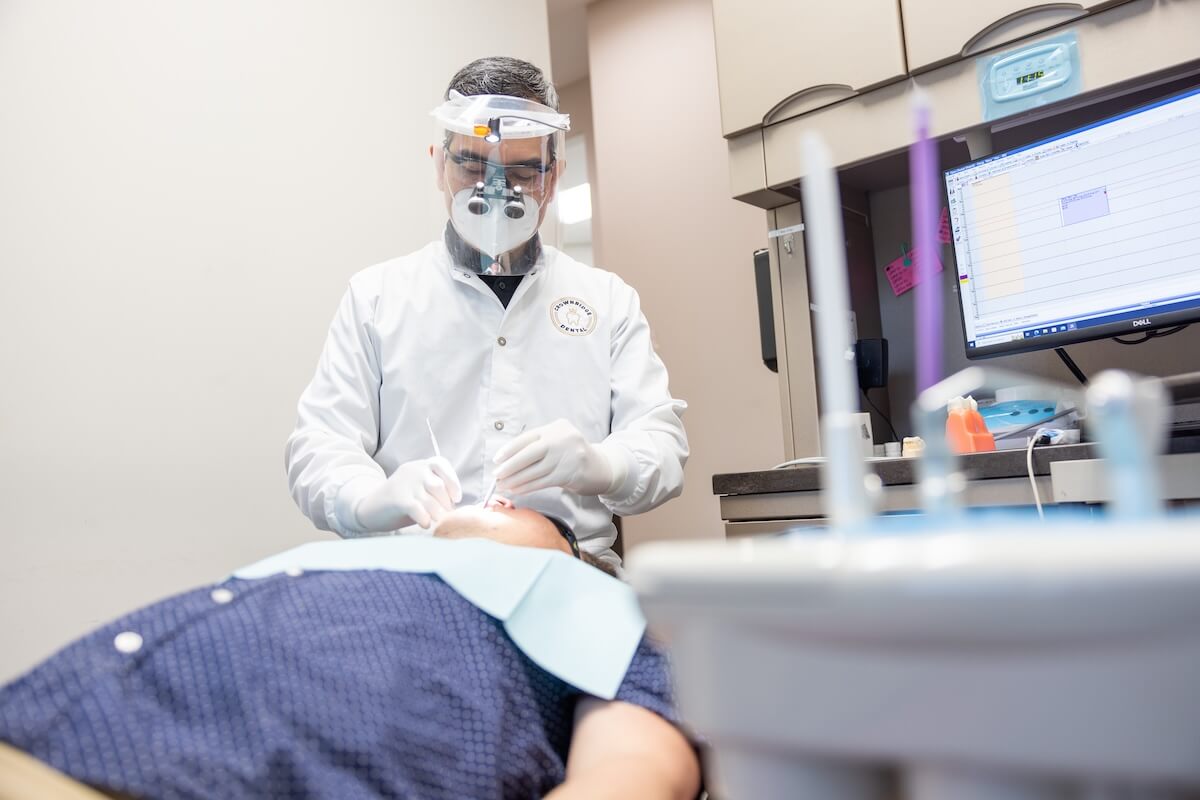
A crown is a cap that is placed over a damaged tooth to restore, strengthen, or protect it. There are many different kinds of materials used to make crowns. Metal restorations offer high levels of durability and are often recommended for the teeth in the back of the mouth. Meanwhile, more visible teeth can be restored with crowns made of tooth-colored material, which can still provide excellent protection while also making sure your smile still looks natural.
Tooth-Colored Fillings
You don’t need a crown to fix smaller cavities and minor dental damage; all you need is a filling to replace the now-missing enamel. Tooth-colored fillings, as you can guess from the name, are made from a material that can be shaded to match the color of your natural smile. That means you won’t be stuck with a dark-colored piece of metal in your smile in the long term; the filling will be virtually indistinguishable from the rest of the tooth.
Inlays & Onlays
Inlays and onlays are used to repair dental damage that is too extensive for a filling but not so widespread that a full crown is needed. An inlay can be used to repair and protect the areas between the cusps of your teeth, whereas an onlay can be placed over a larger area that extends over and past the cusps. Both restorations are made from the same materials as crowns and fulfill the same basic function; they simply focus on protecting different parts of the tooth.
Replacing Missing Teeth - No More Empty Space
At first, a gap in your grin may seem like something you can try to live with. But once you try eating, speaking, and smiling with the empty space, it will quickly become obvious just how much your oral health, confidence, and overall well-being rely on you having a full set of teeth. Don’t lose any time as soon as you realize that you’re facing life with a missing tooth; give Crownridge Dental a call today to schedule a consultation and start learning more about your options for replacing missing teeth in San Antonio, TX that Dr. Pham can offer.
Dental Bridges
A bridge is made up of at least three restorations: two crowns and one or more prosthetic teeth called pontics. The crowns are made to sit on the natural teeth that are still in your mouth so that the pontics can fill the gap. Since bridges are firmly anchored in your mouth, they won’t slip when you’re trying to eat your favorite foods, and they’ll stop your remaining teeth from drifting into the open space left by your missing tooth or teeth.
Dentures
Dentures let you replace many teeth – or possibly all of your teeth – all at once at an affordable price. Both partial and full dentures are made from a combination of acrylic and tooth-colored materials so that your new teeth are as natural-looking as possible. Full dentures that replace the entire arch sit on your gums, while partial dentures that fill in gaps are held by metal clasps. Dentures can be taken out of your mouth to give it a rest; this also makes them easier to clean.
Dental Implants
How are dental implants different from bridges and dentures? There are several ways to answer this question, but the most important distinction is that while bridges and dentures only replace the crown portion of your missing teeth, dental implants do the same thing and also account for the root portion that’s normally beneath your gums. New tooth roots will keep your new smile stable, and they’ll directly contribute to a healthy jawbone.